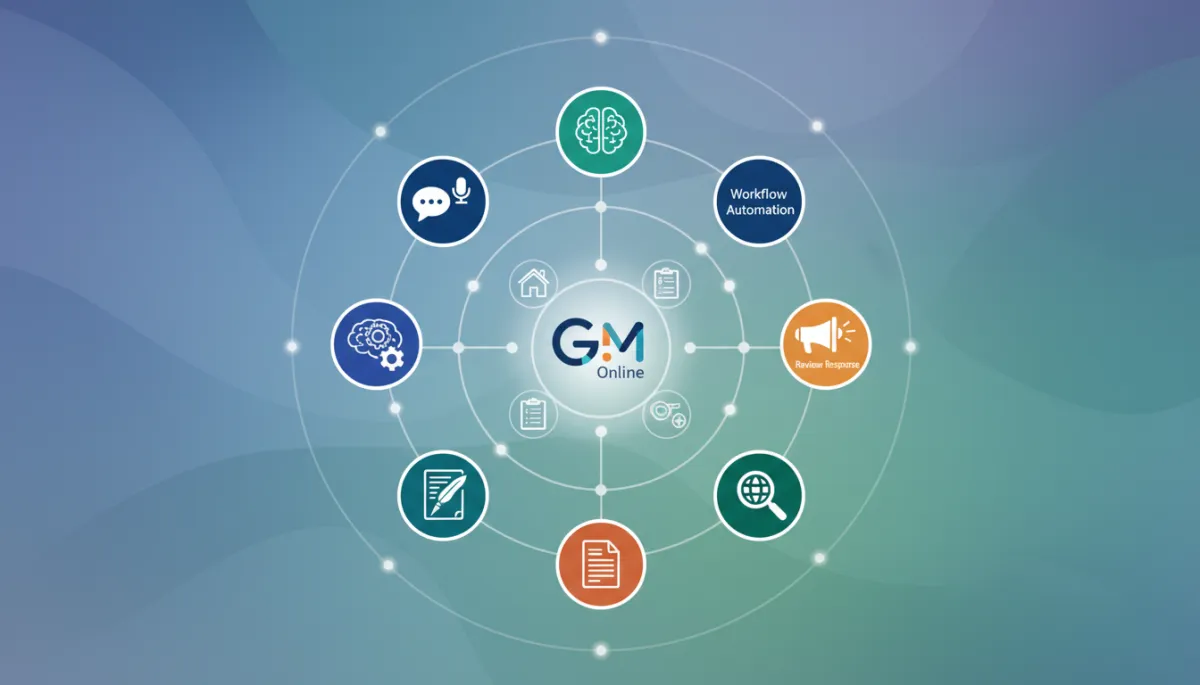
Practical AI Tools for Local Businesses | GenM Online
AI, Local Business, Service Businesses, GenM Online
Practical AI Tools for Small and Local Service Businesses (Without the Hype)
I’m Stoney Morris, founder of GenM Online and a software systems strategist for local and service-based businesses. In this guide, I’ll walk through clear, non-technical ways you can use AI today to save time, improve communication, and make better decisions—without losing the human touch your customers value most. GenM Online Visibility Scan
Use AI To Work Smarter, Not Colder
Practical, connected tools for real local service businesses
Start With the Goal: What Should AI Actually Do for Your Business?
For most local and service-based businesses—home services, professional services, clinics, coaches, and other local operators—AI should do three main things:
Save time by handling repetitive, predictable tasks like drafting replies, summarizing calls, or organizing notes.
Improve communication so leads and customers get clear, fast, and consistent responses on the channels they already use.
Support better decisions by turning scattered information into simple insights you can act on.
AI should not replace your judgment, your empathy, or your responsibility to protect customer privacy. Instead, think of it as a smart assistant that works inside a connected system—your website, reviews, lead forms, calendar, and communication channels—so your business feels faster and more reliable, not robotic.
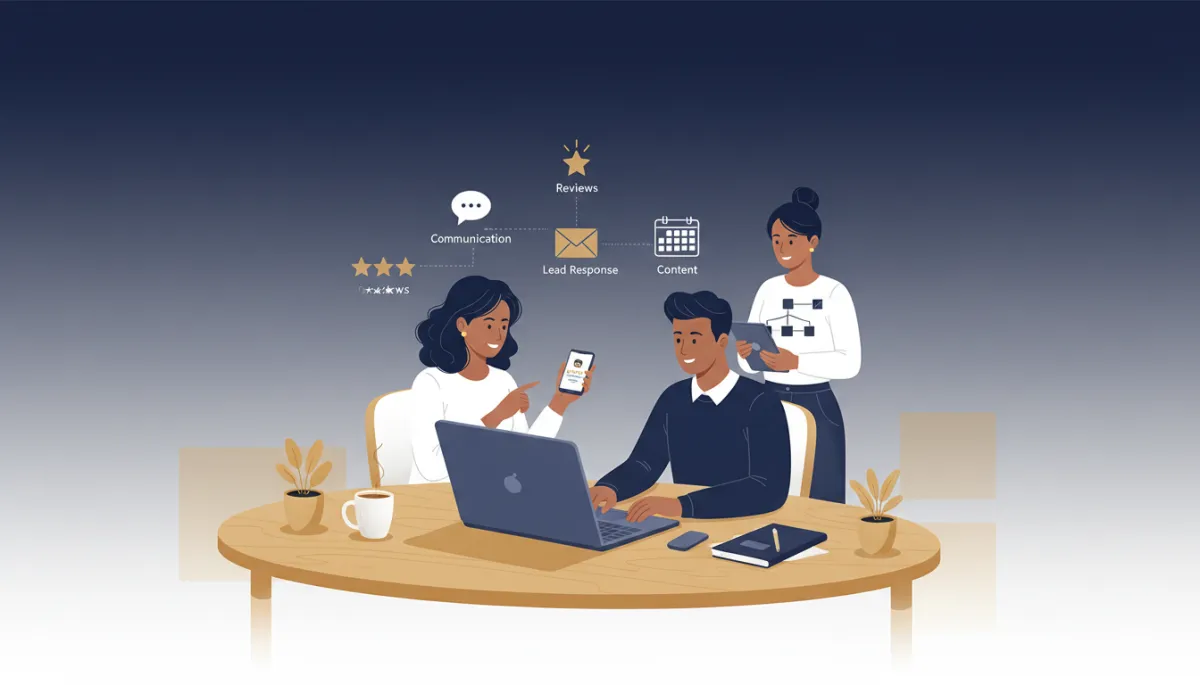
Conversational AI: Faster Lead Response Without Losing the Human
Conversational AI includes chatbots on your website, messaging assistants on SMS or social, and customer-messaging tools that help answer common questions. Used well, these tools can respond to new leads in seconds instead of hours, which is critical when people are comparing multiple providers.
Home services example: A visitor asks, “Do you service my area?” or “Can you do an estimate this week?” Conversational AI can answer basic questions, collect their contact details, and offer available time windows—then alert your team to confirm or adjust.
Clinic example: A prospective patient asks about office hours, insurances accepted, or how to book. AI can share accurate, pre-approved information and guide them to your booking page, while anything medical or sensitive is clearly routed to a human.
Where AI fits: Answering FAQs, capturing contact info, and scheduling requests. Where humans stay in charge: Pricing exceptions, medical questions, emotional situations, and final approvals.
Voice AI: Turning Calls and Voicemails Into Actionable Information
Voice AI tools can transcribe phone calls and voicemails, summarize the main points, and highlight action items. For busy owners, this means less time replaying messages and more time actually following up.
Professional services example: After a consultation call, voice AI can create a clean summary: client goals, key questions, and next steps. You review it, make edits, and send a polished recap email in minutes instead of starting from scratch.
Coaching example: Session recordings can be summarized into bullet points and “homework” for your client. You keep control over tone and advice, while AI does the heavy lifting of organizing the content.
Privacy warning: Never upload calls that contain sensitive personal, medical, financial, or legal details into generic tools. Use platforms that clearly explain how data is stored and who can access it, and always follow your industry’s privacy rules.
Content AI: Drafting, Not Replacing, Your Voice
Content AI tools can help you create blog outlines, social posts, email drafts, and service descriptions. For small teams, this can remove the blank-page problem and save hours each week.
Home services example: Ask AI to draft a simple “spring maintenance checklist” for homeowners. Then you review, adjust to match your actual services and local climate, and add your own tips before publishing.
Clinic example: AI can draft a friendly reminder email about annual checkups or therapy appointments. Your team reviews for accuracy and tone, then schedules it as part of your ongoing communication.
Do not blindly publish AI content. AI can sound confident while being wrong or generic. Always check facts, remove anything that doesn’t fit your services, and make sure the message reflects your values and local regulations.
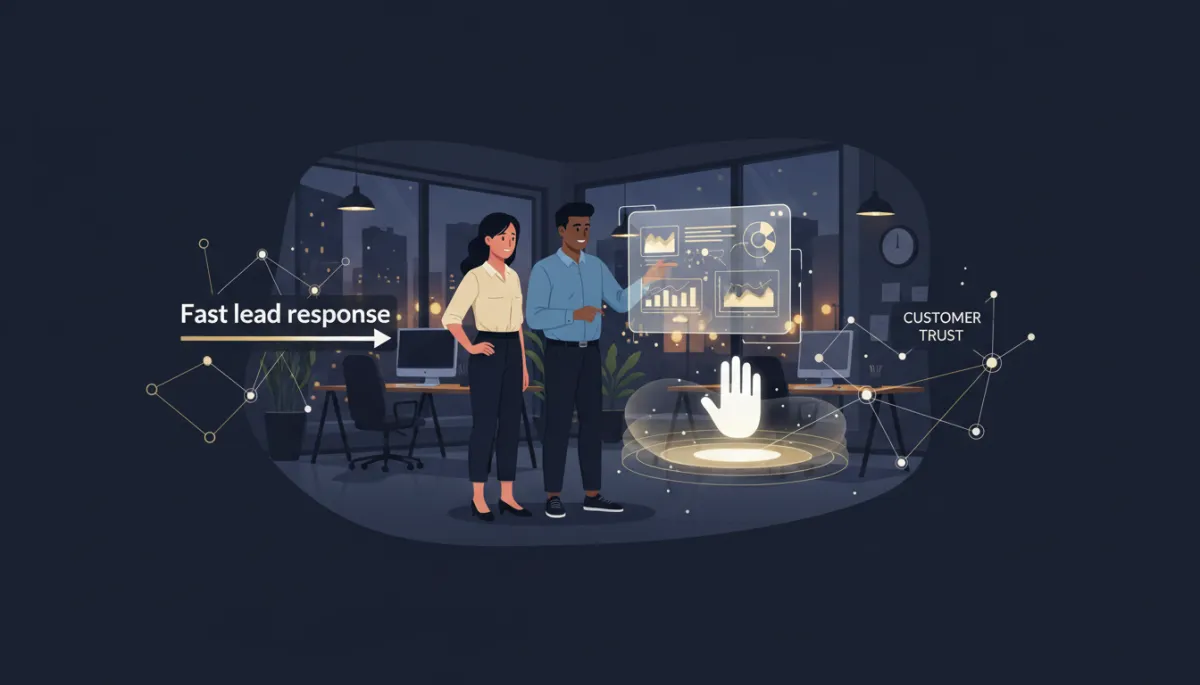
AI should draft content; you provide the final judgment, accuracy, and personality.
Workflow Automation: Connecting the Dots Between Leads, Tasks, and Follow-Up
AI becomes truly useful when it is part of a workflow, not just a single tool. Workflow automation connects your website forms, chat, calls, calendar, and CRM so that when a lead comes in, the right actions happen automatically.
Send an instant, personalized acknowledgment when a form or message is received.
Create a task for your team with key details already filled in by AI.
Trigger reminders if no one has responded within a set time.
This is where modern CRM and communication platforms are heading: fewer manual handoffs, more connected steps. The goal is not to automate everything, but to make sure nothing slips through the cracks.
Key principle: Let AI and automation handle the “when” and “what next,” while your team handles the “should we?” and “how do we say this with care?”
Reviews and Reputation: Smarter Requests and Thoughtful Responses
Reviews are the trust engine for local businesses. AI can help you ask for more reviews and respond more consistently, without sounding canned or careless.
Review request support: After a completed job or visit, AI can send a polite, branded text or email with a direct link to your preferred review site, timed to when the customer is most likely to respond.
Response suggestions: AI can draft a professional reply to a new review—positive or negative—based on templates you’ve approved. You quickly review and publish, instead of starting from a blank screen each time.
Where empathy matters: Never fully automate responses to serious complaints, safety issues, or emotional situations. AI can suggest wording, but a human should always review and customize those replies.
Website, Funnels, and AI-Powered Search Research
Your website and funnels are often the first place AI can help you get found and get chosen. AI can:
Suggest clearer headlines and service descriptions based on what people in your area are actually searching for, using AI-powered keyword and topic research that surfaces patterns in local search behavior.
Help you create simple landing pages for specific services—“emergency plumbing,” “sports injury clinic,” “executive coaching for managers”—so visitors see exactly what they need.
Analyze which pages and offers are working best, then summarize the findings in plain language so you can adjust without digging through complex reports.
As AI-powered search and voice search continue to grow, being clear, consistent, and locally relevant will matter even more. AI can help you create that clarity, but you decide what you actually want to be known for. Building a strong foundation for local search SEO
Meeting and Note Summaries: Organizing Information So You Can Act on It
Many owners live inside notebooks, sticky notes, and scattered documents. AI can turn that chaos into organized information:
Summarize team meetings into action lists and deadlines.
Group customer feedback into themes so you can see patterns—like repeated complaints about scheduling or praise for a specific technician.
Turn long documents into short, clear briefs for your staff.
Better decisions, not just more data: AI is most valuable when it helps you see “What should we do next?”—not just “Here is everything we have.”
Responsible Use: What to Automate and What to Protect
To stay aligned with your values and protect your customers, keep these guardrails in place:
Automate: reminders, confirmations, FAQs, draft content, summaries, review requests, and internal routing of leads and tasks.
Keep human judgment for: pricing decisions, medical or legal information, emotional or sensitive conversations, hiring and firing, and any public content that represents your brand.
Protect privacy: avoid pasting customer names, addresses, health details, or financial information into generic AI tools. Use platforms that are designed for business use and explain how data is handled.
Common mistakes to avoid: blindly publishing AI-generated content, trusting every AI answer without checking, automating sensitive conversations, and using tools that are not designed to protect customer data.
Why a Connected System Matters More Than a Pile of Tools
Many owners sign up for separate tools—one for chat, one for reviews, one for email, one for scheduling—and end up with more work, not less. The future of AI in small business is deeper integration into everyday processes, not more disconnected apps.
When AI is part of one connected system:
A new lead from your website or chat is tracked, responded to quickly, and followed through to booking—not lost in someone’s inbox.
Reviews, responses, and follow-up messages stay consistent with the same voice and standards.
You can actually see, in one place, how visibility, trust, and response time are affecting your growth.
How GenM Online Connects AI, Visibility, Trust, and Workflows
At GenM Online, our focus is simple: help local and service-based businesses get found, get chosen, and scale smarter through one connected platform. We bring AI into your business in a way that supports your visibility and reputation, instead of adding more noise.
Visibility: Tools to strengthen how you show up where people search and compare, supported by AI-assisted content and clear local positioning.
Trust: Review gathering and response support that keeps your reputation active, consistent, and aligned with your values.
Lead response: Connected conversational AI and workflows so new inquiries are acknowledged quickly and routed to the right person, with clear next steps.
Workflows: Practical automations that tie together your website, forms, messages, reviews, and tasks so your team can focus on serving customers, not chasing tools.
The goal is not to turn your business into a robot. It is to give you a Visibility & Trust Engine™ that uses AI responsibly to support the way you already serve people—faster, clearer, and more consistently.
Your Next Step: Get a Clear Picture With a Free Visibility Scan
If you’re unsure where to start with AI—or you’re tired of juggling disconnected tools—the best first step is clarity. You need to see how visible you are today, how your reviews and trust signals look, and where leads are slipping through the cracks.
That’s why we offer the free GenM Online Visibility Scan. It gives you a straightforward view of your current online presence, reputation, and response readiness, and it highlights where connected AI and smarter workflows can make the biggest difference—without pressure or unrealistic promises.
If you want AI to support your business instead of complicating it,
I invite you to Start Your Free Visibility Scan with GenM Online and see exactly where to focus next.


