Website SEO for Local Service Businesses | GenM Online
SEO, Local Visibility, Service Businesses
Website SEO for Small and Local Service Businesses: Building a Foundation Search Engines and AI Can Trust
I’m Stoney Morris, founder of GenM Online. In this guide, I want to break down website SEO for small and local service-based businesses in clear, practical language—no jargon, no hype. The goal is simple: help you build a website foundation that search engines and AI-powered platforms can understand, trust, and confidently recommend to local customers who are ready to book, call, or request a quote.
SEO Today: More Than “Ranking on Google”
Modern AI search engines like ChatGPT, Gemini, and Google’s AI Overviews don't just count keywords; they evaluate your overall digital footprint. When your website structure, service details, and business profiles sync seamlessly, these tools can synthesize your content into direct answers for local searchers, giving your business a distinct edge over competitors with fragmented setups.
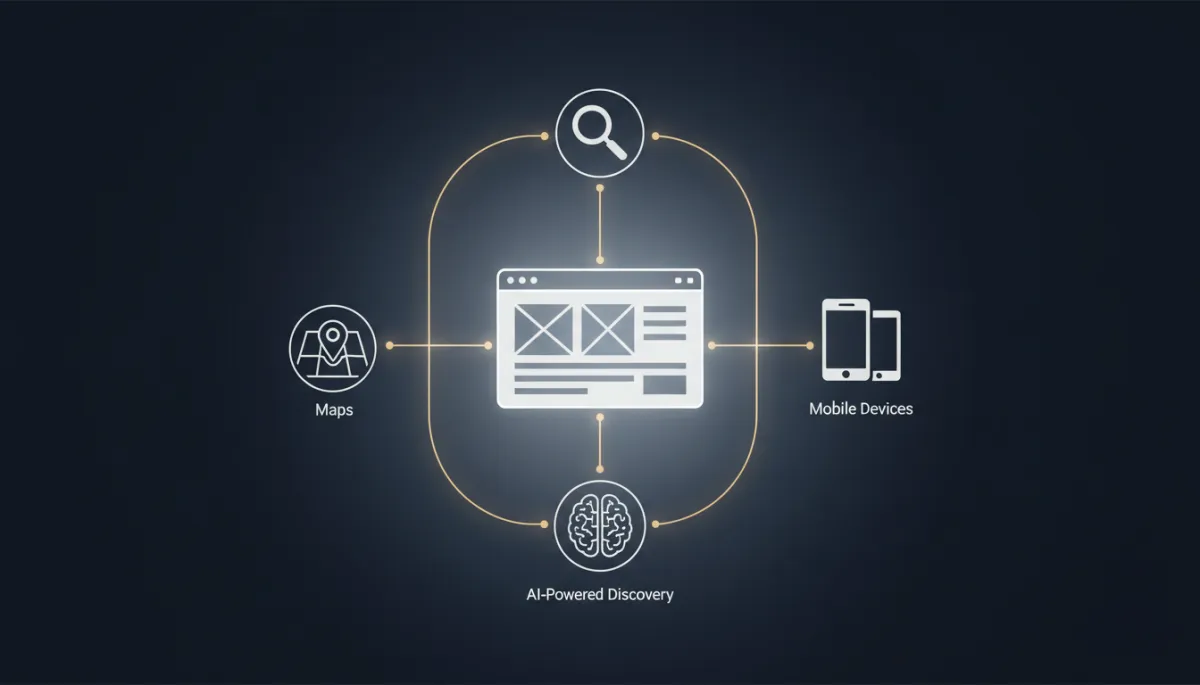
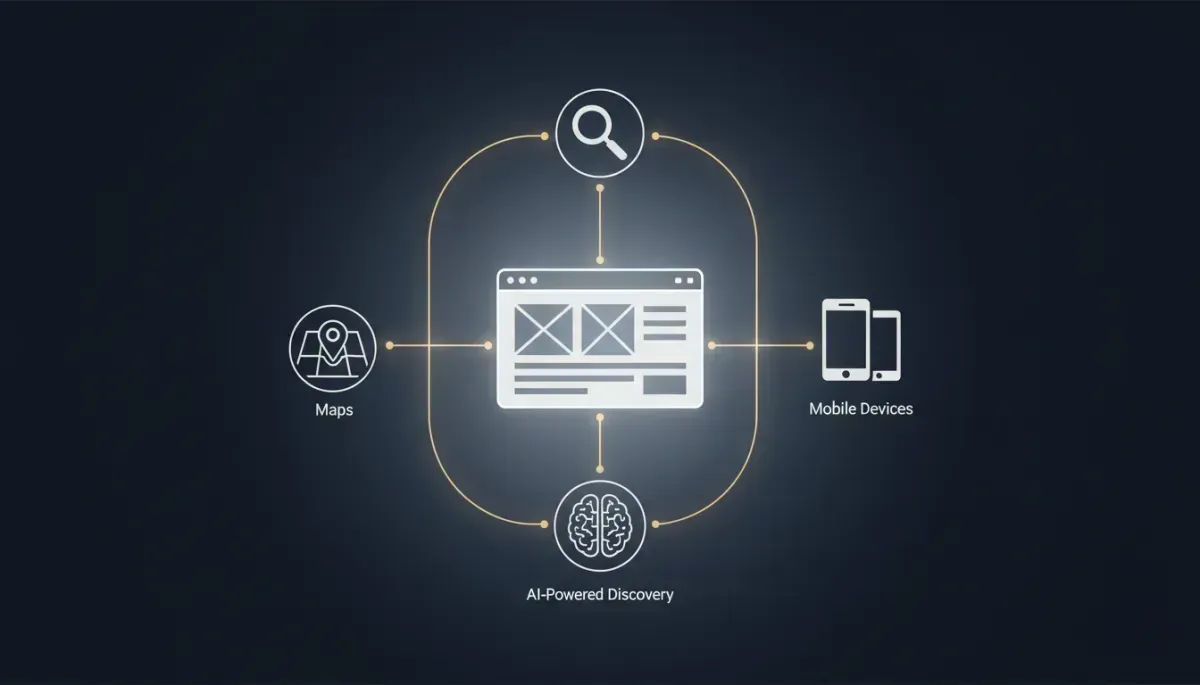
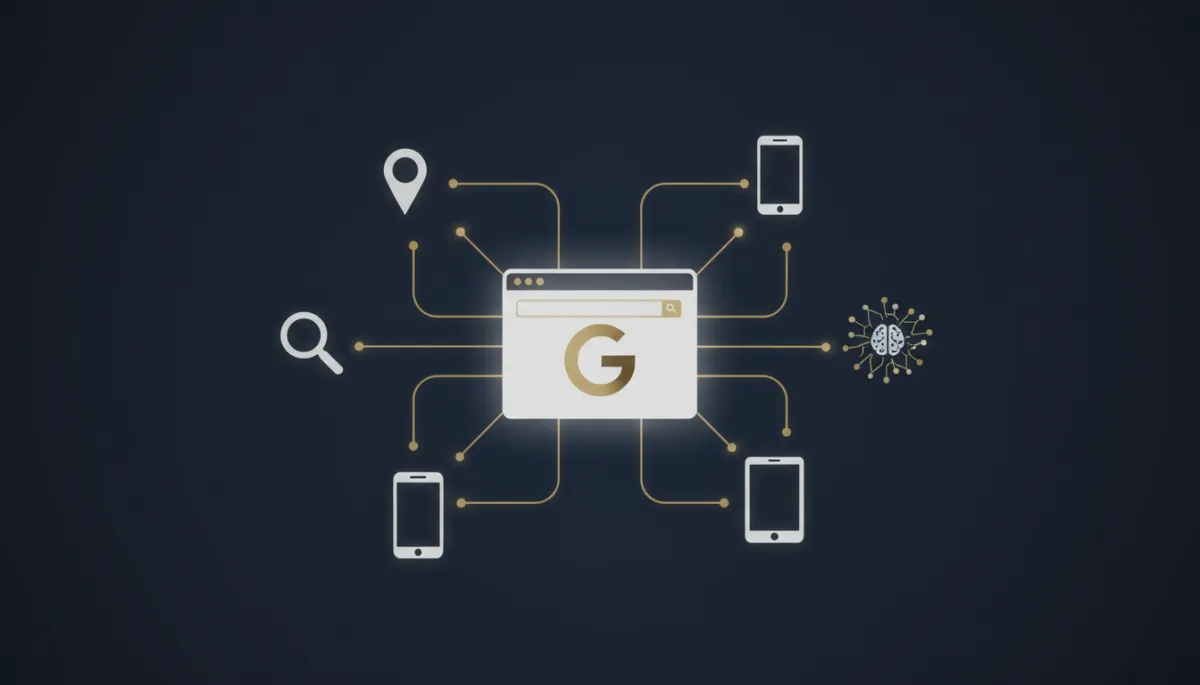
Traditional SEO advice focused almost entirely on “ranking webpages.” That still matters, but it is only one piece of a modern visibility system. Today, search engines and AI-powered platforms (like Google Search, Google Maps, voice assistants, and AI chat tools) look at how well your website, your Google Business Profile, your business listings, your reviews, and your contact and service information all line up and support each other.
When these pieces are consistent and clear, you do three things:
Get found by people searching for the services you offer in your area.
Get chosen because your business looks trustworthy, established, and easy to work with.
Respond faster so you convert more of those opportunities into booked jobs or appointments.
GenM Online exists to connect these dots for local and service-based businesses. But first, let’s talk about the website itself, because that is the foundation everything else rests on.
How a Strong Website Foundation Helps Search and AI Recommend Your Business
Search engines and AI systems work by reading, organizing, and interpreting information. They are constantly asking:
What does this business do?
Where do they serve customers?
Are they real and trustworthy?
Can I confidently recommend them to someone searching right now?
A strong website foundation answers these questions clearly and consistently. When your pages are structured well, your content is organized, and your technical basics are in place, it becomes much easier for search engines and AI tools to understand what you offer and when to show you as a top local option.
Core On-Page Elements: Titles, Meta Descriptions, and Headings
Let’s start with three simple elements you can improve without becoming technical: page titles, meta descriptions, and headings. These tell search engines—and people—what each page is about.
Page Titles: Your First Impression in Search Results
Crafting page titles requires balancing search engine crawlers with real human psychology. A hyper-focused title clearly tells search engines where you operate while reassuring a prospective client that they have found the exact specialist they need. Keeping your primary service and city near the start of the title ensures your most vital details remain visible across all mobile device displays.
The page title is commonly used as the clickable headline shown in search results. For a local service business, a strong title usually includes:
Your primary service (for example, “Plumbing Repair”)
Your main location (for example, “Austin, TX”)
Your brand name (for example, “ABC Plumbing”)
A practical pattern is: “[Service] in [City] | [Business Name]”. You do not need to stuff keywords—just be clear and specific.
Meta Descriptions: Your Short Sales Pitch
The meta description is the short paragraph under the title in search results. It does not directly control rankings, but it strongly influences whether someone clicks. Think of it as a 1–2 sentence pitch answering:
Who you help
What you do
Why you’re a safe, trustworthy choice
Include a simple call to action like “Call today for a free estimate” or “Schedule your appointment online.”
Headings: Structure for Humans and Search Engines
Well-structured headings create a logical hierarchy that acts as an outline for both readers and automated crawlers. Breaking complex service descriptions into bite-sized H2 and H3 subsections allows visitors to skim quickly for answers to their specific questions. This natural, topic-driven layout improves user engagement metrics like time-on-page, sending strong signal quality back to search algorithms.
Headings (H1, H2, H3, and so on) break your content into logical sections. They help visitors skim and help search engines understand what each section covers. A few practical tips:
Use one main heading (H1) per page that clearly states the page’s topic.
Use subheadings (H2, H3) to organize services, benefits, FAQs, and locations.
Include natural phrases people would actually search, like “Emergency AC repair” or “Family dental care in [City].”
Service Pages and Location Relevance: Make It Obvious What You Do and Where
One of the most common issues I see is a single “Services” page that lists everything the business offers in a few bullet points. That makes it hard for search engines and AI to match you to specific service searches, and it makes it harder for customers to feel confident you truly specialize in what they need.
A stronger approach is to create dedicated service pages for your main offerings—each clearly tied to your locations. For example:
“Water Heater Installation in Denver”
“Family Law Consultations in Tacoma”
“Physical Therapy for Sports Injuries in Raleigh”
On each page, talk about:
Who the service is for
Common problems you solve
Areas or neighborhoods you serve
This builds strong location relevance, which is critical for local SEO and for AI tools that answer questions like “find a nearby [service] I can trust.”
Mobile Performance and Site Speed: Don’t Make People Wait or Pinch and Zoom
Many local service searches happen on phones. If your site is slow, hard to read on a small screen, or requires constant zooming, people leave—and search engines notice. Mobile performance and site speed are both user experience issues and SEO signals.
Practical steps you can take without becoming technical:
View your website on your own phone. Is the text readable without zooming? Are buttons easy to tap? If not, talk to your web provider about a mobile-responsive design.
Remove unnecessary large images or background videos that slow things down, especially on your home and key service pages.
Keep pages focused. The more heavy widgets, pop-ups, and scripts you add, the slower things get.
Internal Links, Image Alt Text, Crawlability, and Indexing: Helping Search Engines Navigate
Once your main pages are in place, you want to make it easy for search engines to discover and understand them. Four concepts matter here: internal links, image alt text, crawlability, and indexing.
Internal Links: Guide Visitors and Search Engines to Key Pages
Internal links are simple links from one page on your site to another. They help visitors discover related services, and they show search engines which pages are most important. For example:
From your home page, link clearly to your top service pages and your contact or booking page.
From each service page, link to related services and to your FAQ or pricing pages if you have them.
Use descriptive link text such as “view our drain cleaning services” instead of “click here.” This gives both people and search engines more context.
Image Alt Text: Small Detail, Real Impact
Alt text is a short description added to images. It helps with accessibility and gives search engines extra information. You do not need to overthink it. For a photo of your team installing a furnace in Dallas, a simple alt text like “HVAC technicians installing a furnace in Dallas home” is enough. Aim to describe the image and naturally mention the service or location when it makes sense.
Crawlability and Indexing: Making Sure Your Pages Can Be Found
For your pages to appear in search results, search engines need to crawl (visit) and index (store and organize) them. Most modern website platforms handle this by default, but issues can still arise—especially after redesigns or site moves.
Practical steps you can take:
Search for “site:yourdomain.com” in Google. If you see a list of your pages, they are being indexed. If almost nothing shows up, it is a red flag that something is blocking visibility.
Avoid putting important content behind logins or in PDFs only. Your core services and contact details should be on normal, crawlable web pages.
Schema Markup and Clear Calls to Action: Clarity for Machines and Humans
Schema Markup: A Translator for Your Business Details
Schema markup is a structured way of labeling your business information so search engines and AI systems can interpret it more reliably. It is not something most business owners will hand-code, but it is important to understand at a high level. Local business schema can highlight:
Your business name, address, and phone number
Your opening hours and service areas
Your main services and links to key pages
GenM Online can help businesses strengthen the broader visibility system around their website, while schema may be implemented through the website platform, an SEO tool, or a qualified provider.
Clear Calls to Action: Turn Visibility into Leads
SEO is not just about traffic; it is about turning visitors into inquiries, bookings, and revenue. Every important page on your site should have a clear, visible call to action (CTA) that tells people what to do next, such as:
“Call now to schedule service”
“Request your free estimate”
“Book your appointment online”
Make sure your phone number is clickable on mobile, your forms are short and simple, and your response process is reliable. GenM Online’s Visibility & Trust Engine™ is designed to connect these calls to action with fast lead response systems so you do not lose opportunities you have already paid to earn.
SEO as Part of a Complete Visibility and Trust System
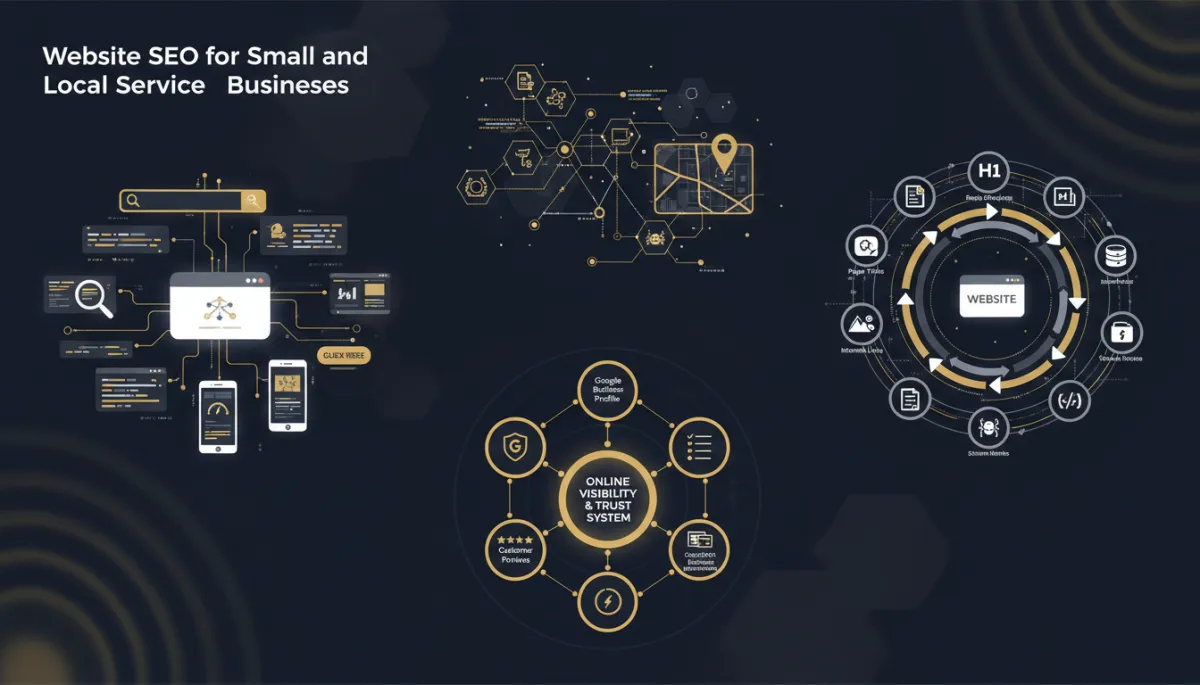
A strong website is essential, but on its own it is not enough. Modern visibility for local service businesses depends on how well your website SEO works together with:
Google Business Profile optimization – Clear categories, accurate hours, service areas, and up-to-date photos all reinforce what your website says about your services and locations.
Accurate business listings – Directories and maps should show the same name, address, phone number, and website as your site. Inconsistencies create doubt for both customers and algorithms.
Customer reviews – Genuine, recent reviews on Google and other platforms are powerful trust signals for people and for AI systems deciding which businesses to surface first.
Consistent business information – Your hours, services, pricing ranges, and contact options should match across your website, profiles, and listings. Consistency is a core ingredient of trust.
GenM Online is built to connect these pieces into one system—your website SEO, your visibility across platforms, your trust signals, and your lead response—so you can scale smarter instead of chasing disconnected tools and tactics. Visibility & Trust Engine™
Practical Next Steps You Can Take Right Now
You do not need to become a technical expert to strengthen your SEO foundation. Here are simple actions you can take in the next week:
List your top 3–5 services and make sure each has its own page with a clear title, heading, and call to action.
Check that your city or service area is mentioned naturally on your home page and main service pages.
Review your site on a phone and write down anything that feels slow, confusing, or hard to use. Share that list with your web team or provider.
Search your business name on Google and confirm your website, Google Business Profile, and major listings all show the same business name, address, and phone number.
Identify one place on your website where you can add a clearer, more direct call to action today.
Connect Your Website, Visibility, Trust, and Lead Response with GenM Online
As a software systems strategist for local and service-based businesses, my focus with GenM Online is simple: help you get found, get chosen, and scale smarter through one connected platform. That means your website SEO does not live in isolation. It works alongside your Google Business Profile, your listings, your reviews, and your lead response tools as part of a single Visibility & Trust Engine™.
If you want a clear, no-pressure view of where you stand today—and where you can improve without wasting time or money—the best place to start is with data, not guesses.
Start Your Free Visibility Scan with GenM Online. You will see how your website foundation, SEO signals, listings, reviews, and response systems look from the outside, the same way search engines and AI-powered platforms do. From there, you can decide your next steps with clarity and confidence.


