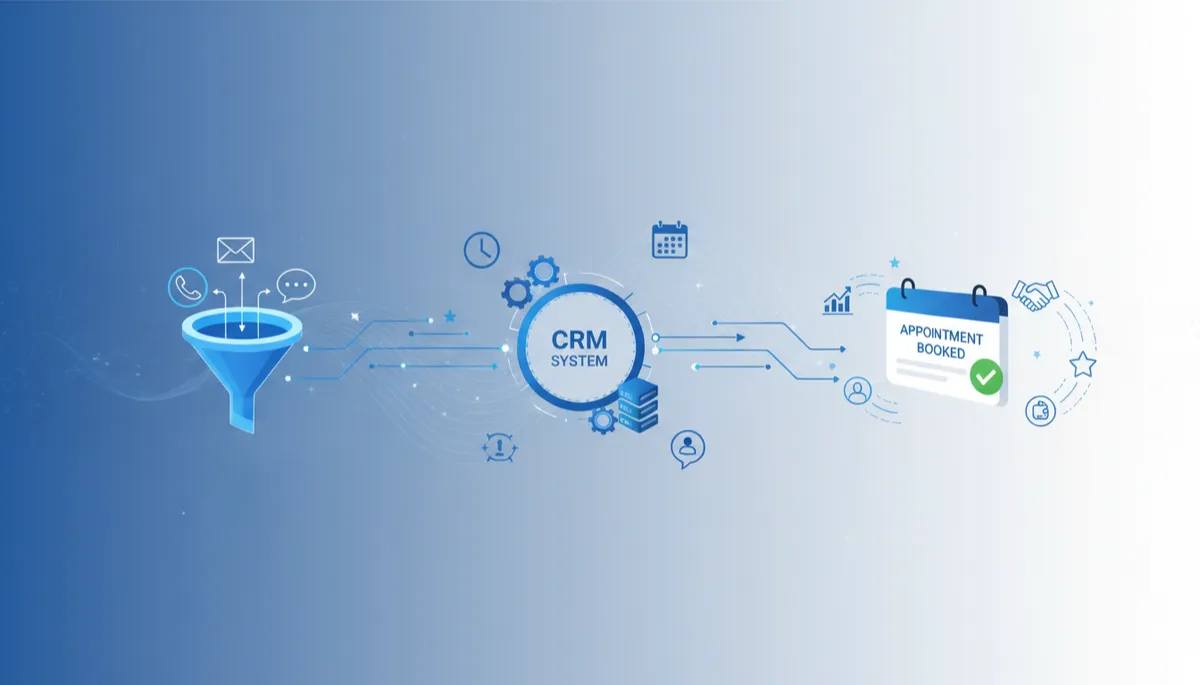
Lead Follow-Up Should Not Depend on Memory | GenM Online
Lead Management, Service Businesses, Local Growth
Why Service Businesses Need Consistent Lead Follow-Up Systems
In local and service-based businesses, leads rarely disappear overnight—they fade through missed calls, unanswered inquiries, delayed responses, and forgotten follow-ups. Relying on memory, handwritten notes, or ad‑hoc reminders is no longer enough in a market where prospects can compare options in seconds and competitors respond faster. A consistent, system-driven lead follow-up process is now a core capability for visibility, trust, and sustainable growth.
The Hidden Cost of Missed and Mishandled Leads
Missed calls and unanswered inquiries
For most service businesses—plumbers, clinics, accounting firms, cleaning companies—the phone and website contact forms are the front door. When a call goes unanswered or a form submission sits in an inbox, the prospect does not pause their search. They move on to the next provider who responds first and with clarity. Every missed call or unanswered inquiry is not just a lost opportunity—it is a signal to the market that your business may be less responsive or less reliable than alternatives.
Delayed responses and forgotten follow-ups
Even when you eventually respond, delay erodes trust. A prospect who requested a quote yesterday may already have booked with a competitor today. When follow-ups depend on memory, sticky notes, or scattered spreadsheets, important touchpoints slip—no reminder to call back after sending a quote, no check‑in after an initial consultation, no follow‑through on “call me next week.” Over time, these gaps compound into lower conversion rates, weaker reputation, and slower local growth.
Why Systems Beat Memory for Lead Follow-Up
Capturing every lead in one place
The first step is simple—capture every lead. That includes calls, texts, website forms, social messages, and walk‑ins. When leads are captured into a single system instead of scattered across notebooks, browser tabs, and voicemail, you gain control. You can see who contacted you, when, through which channel, and what they asked for. Nothing depends on a staff member’s memory at the end of a long day.
For example, a small HVAC company that routes all web form submissions and missed calls into a central lead list can quickly identify hot opportunities—emergency repair requests, quote requests, seasonal tune‑ups—and prioritize outreach instead of hoping someone remembers to check email or voicemail later.
Maintaining organized customer conversations
Prospects expect continuity. When they call back, they do not want to repeat their entire story. Organized customer conversations—documented in a central record—mean anyone on your team can see past messages, quotes, appointment times, and preferences. This organization signals professionalism and builds trust, especially for higher‑value services such as legal advice, dental care, or home renovation.
A family dental clinic, for instance, can track that a new patient asked about evening appointments and insurance coverage. When the clinic follows up, they can address both points directly instead of sending a generic message. The result—fewer back‑and‑forth exchanges and a smoother path to booking.
The Role of a CRM in Service Business Follow-Up
Using a CRM as your lead command center
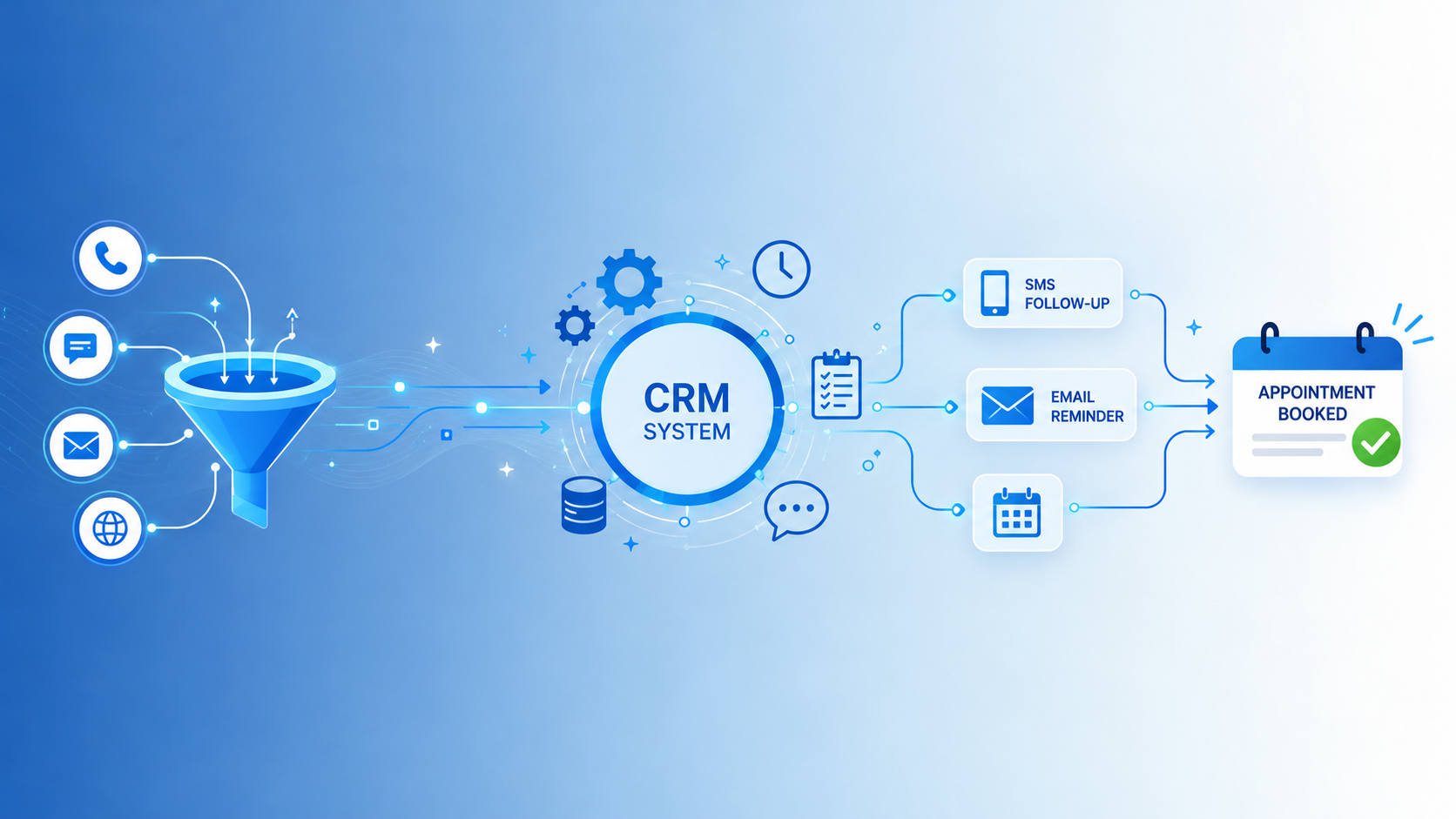
A customer relationship management system—CRM—is no longer just for enterprise sales teams. For local service businesses, a CRM acts as a lead command center. It stores contact details, tracks every interaction, and shows where each lead is in your pipeline—new inquiry, quote sent, follow‑up due, or appointment booked. Instead of guessing who needs attention today, you have a clear list and defined next steps.
Consider a landscaping business handling dozens of seasonal inquiries. With a CRM, the owner can filter leads who received a quote but have not yet booked, then send a focused follow‑up rather than searching through text threads and notes. This structure turns scattered interest into predictable work.
Setting reminders so follow-ups never slip
Reminders are where systems outperform even the most diligent team. A CRM that allows you to set follow‑up tasks—call in two days, send a reminder in one week, check in after service—removes the need to remember. Each morning, your team sees a focused list of follow‑ups due that day. This simple discipline dramatically reduces forgotten follow‑ups and keeps your brand present in the prospect’s decision window.
Timely SMS, Email, and Easier Appointment Scheduling
Sending timely SMS and email follow-ups
Response speed is now a competitive advantage. Automated or templated SMS and email follow-ups allow you to respond quickly—even outside normal hours—without sacrificing clarity or professionalism. A lead who submits a form at 9:30 p.m. can receive an immediate confirmation and a clear expectation: “We received your request and will call you between 8–9 a.m. tomorrow.” That simple message keeps them engaged and less likely to contact a competitor overnight.
For a home cleaning company, a structured sequence might look like this:
Immediate SMS confirming the inquiry and promising a quote window.
Email within a few hours with pricing, availability, and next steps.
Reminder SMS the next day if the quote is unopened or unanswered.
This cadence keeps the conversation alive without overwhelming the prospect and significantly reduces the risk of silent drop‑off.
Making appointment scheduling easier for both sides
Once a prospect is interested, friction in scheduling can still derail the opportunity. Back‑and‑forth messages about availability, time zones, or visit windows create delays and frustration. Integrated scheduling—where leads can choose from real‑time availability via a link sent by SMS or email—removes this friction and shortens the path from inquiry to booked appointment.
A local physiotherapy clinic, for example, can send new patients a secure booking link immediately after a phone or web inquiry. Patients select a time, receive automatic confirmations and reminders, and arrive better prepared. The clinic benefits from fuller calendars, fewer no‑shows, and a more professional first impression.
Practical Examples Across Service Industries
The principles of consistent lead follow-up apply across local and professional services:
Home services—Electricians and roofers capture every call, missed call, and form into a CRM, send rapid SMS acknowledgements, and schedule on‑site estimates through shared booking links.
Professional services—Accountants and legal practices track consultations, send timely document checklists by email, and set reminders for follow‑up discussions before deadlines.
Health and wellness clinics—Chiropractors and therapists manage intake forms, appointment reminders, and post‑visit check‑ins from one system, strengthening both retention and reputation.
In each case, the outcome is the same—fewer lost leads, stronger trust signals, and a more consistent experience that aligns with how modern customers evaluate and choose local providers.
Lead Follow-Up Checklist for Service Businesses
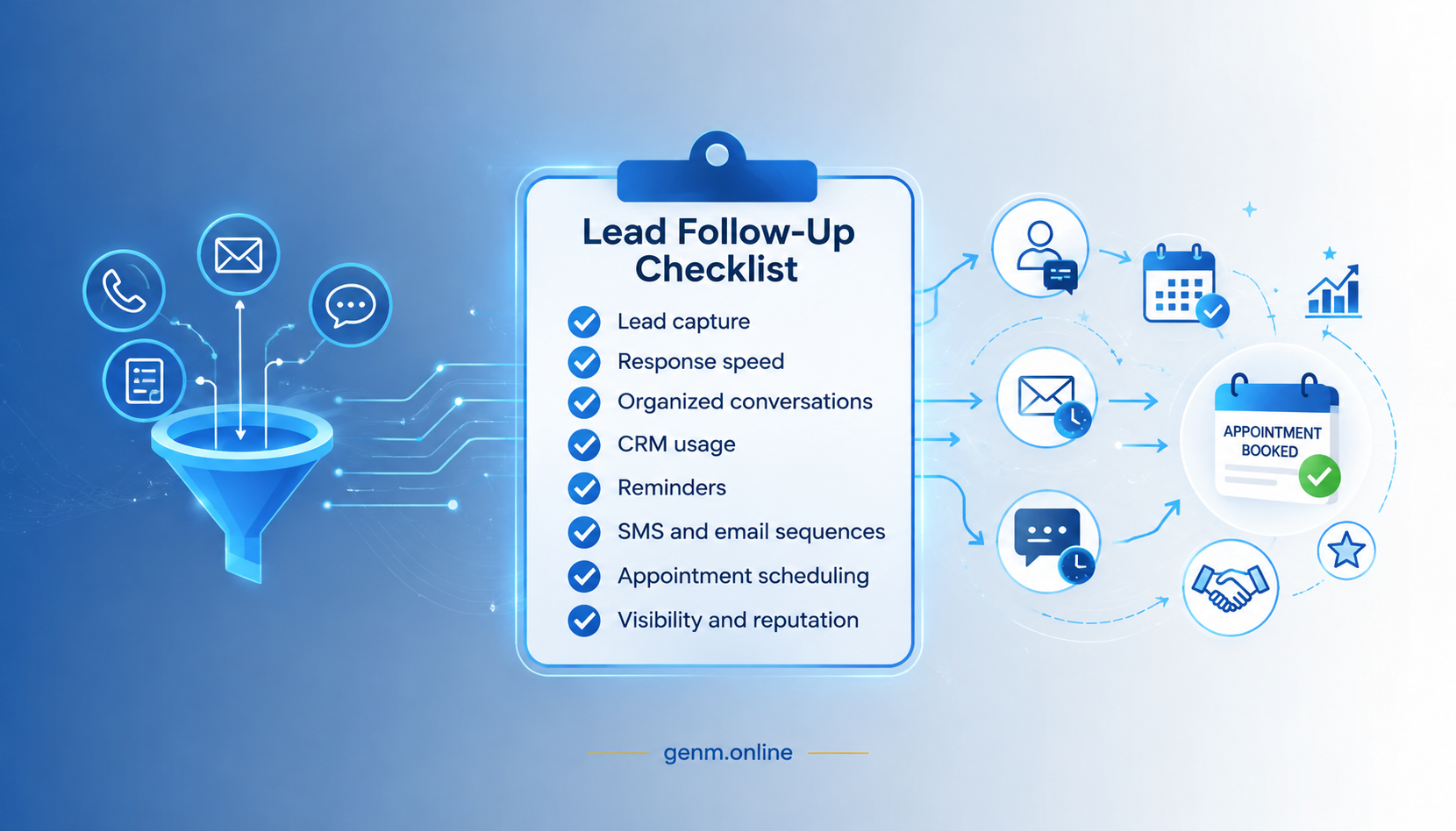
Use this checklist to evaluate and strengthen your current approach:
*Lead capture*—Every call, missed call, web form, text, and message is captured into one system, not just email or voicemail.
*Response speed*—New inquiries receive an SMS or email acknowledgement within minutes, even outside business hours.
*Organized conversations*—All notes, quotes, and messages are stored in a single customer record accessible to your team.
*CRM usage*—You use a CRM to track lead stages—new, contacted, quoted, scheduled, completed—rather than relying on memory or paper.
*Reminders*—Follow-up tasks are scheduled and visible each day so no lead is forgotten after a quote or consultation.
*SMS and email sequences*—Standardized, professional templates are used for confirmations, reminders, and check‑ins.
*Appointment scheduling*—Prospects can book or confirm times through a simple link or integrated calendar, reducing back‑and‑forth.
*Visibility and reputation*—Your follow-up process supports online reviews, referrals, and local search visibility by delivering a consistent experience.
How GenM Online’s Growth Engine Connects Follow-Up and Visibility
GenM Online is built for local and service businesses that want connected systems rather than disconnected tools. The Growth Engine links lead capture, customer communication, follow-up automation, CRM, and appointment booking into one platform—so your team can focus on serving clients instead of chasing information across multiple apps.
Leads from calls, forms, and other channels are captured centrally, reducing missed or lost opportunities.
Conversations—SMS, email, and notes—are organized by contact, giving your team full context at every touchpoint.
Automated and scheduled follow-ups support timely responses without requiring constant manual effort or memory.
Integrated scheduling simplifies appointment booking for prospects and staff, improving show rates and utilization.
The outcome is a more visible, more responsive, and more trusted business—one that meets modern expectations across search, communication, and reputation. You can explore how GenM Online structures these capabilities for service businesses at the Solutions page: https://genm.online/solutions, and review plan options at: https://genm.online/pricing.
Frequently Asked Questions About Lead Follow-Up Systems
Do small service businesses really need a CRM for follow-up
Yes. A CRM is less about size and more about reliability. Even a two‑person team benefits from a single place to track leads, conversations, and next actions—reducing forgotten follow-ups and improving conversion from inquiry to booked work.
How fast should we respond to new leads
Aim for minutes, not hours. An immediate automated SMS or email acknowledgement, followed by a clear next step within normal business hours, keeps you competitive and reduces the likelihood that prospects contact multiple providers and choose the first to respond.
Will automated follow-ups feel impersonal to prospects
Not when they are written clearly and used thoughtfully. Automation should handle confirmations, reminders, and basic updates, while your team focuses on higher‑value conversations. The combination usually feels more responsive and more professional than inconsistent manual outreach.
Conclusion: Turn Lead Follow-Up into a Strategic Advantage
Service businesses compete on visibility, trust, and responsiveness. Missed calls, unanswered inquiries, delayed responses, and forgotten follow-ups quietly erode all three. By capturing every lead, organizing conversations in a CRM, using timely SMS and email sequences, setting structured reminders, and simplifying appointment scheduling, you move from reactive to deliberate growth. This is not about more software for its own sake—it is about building a reliable system that supports how modern customers search, compare, and choose providers.
GenM Online is designed to help local and service businesses connect these pieces through one Growth Engine—supporting better follow-up, stronger reputation, and more predictable revenue. To see where your current visibility and lead systems stand today, begin with a clear, low‑friction step.
Start Your Free Visibility Scan at https://genm.online/free/visibility-scan.
Get Found. Get Chosen. Scale Smarter.


