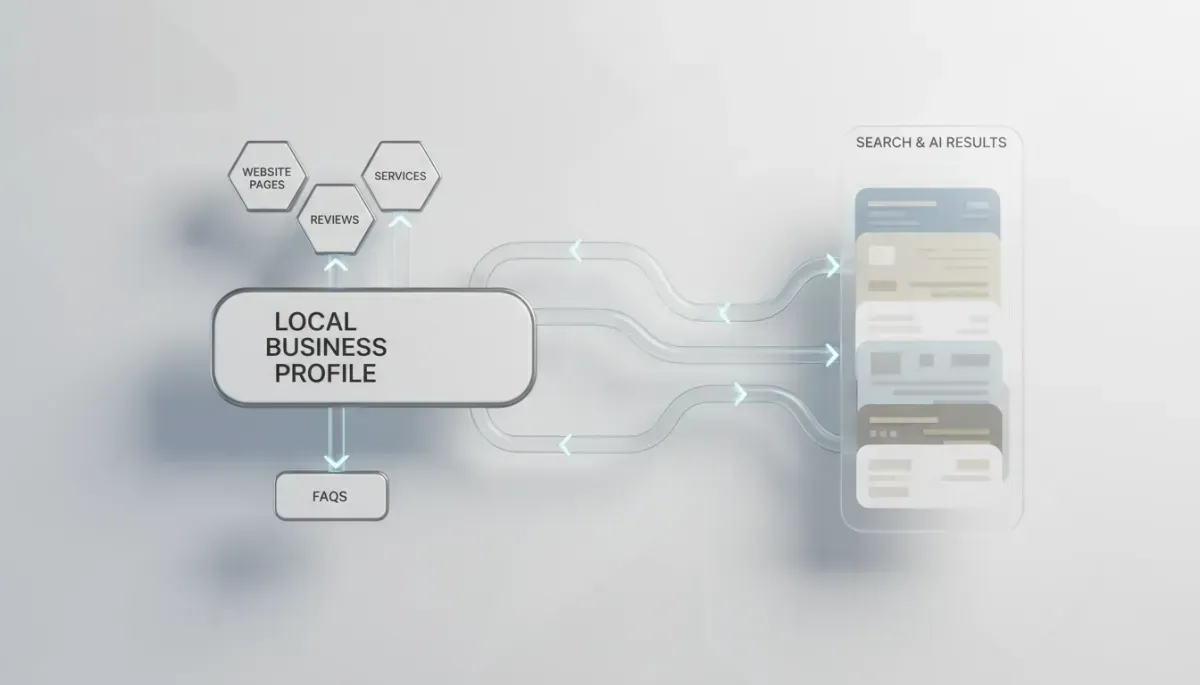
Schema Markup Guide for Local Service Businesses | GenM Online
Local SEO, Schema Markup, Service Businesses
Schema Markup for Local & Service Businesses: A Practical Guide to Being Understood Online
I’m Stoney Morris, founder of GenM Online and a software systems strategist for local and service-based businesses. In this guide, I’ll walk you through what schema markup is, how it helps search engines and AI-powered platforms understand your business, and how to use it as part of a connected visibility and trust foundation—not as a magic trick or shortcut.
What Schema Markup Actually Is (In Plain English)
Schema markup is structured data you add to your website to explain, in a very organized way, what your business and your pages are about. Think of it as labels and definitions for machines. Your human visitors see your pages. Search engines and AI assistants see your schema as a clean, structured summary of the same information.
When done correctly, schema helps Google, Bing, Apple, and AI-powered platforms understand your identity, services, location or service area, hours, reviews, FAQs, and website content. Instead of guessing what you do, they get a clear, consistent description they can trust and reuse across search results, maps, and AI answers.
How Schema Helps Search & AI Understand Your Business
For a local or service-based business, there are a few key questions search engines and AI tools are always trying to answer about you:
Who are you? (business identity and brand)
What do you do? (services and specialties)
Where do you operate? (address or service area)
When are you open? (business hours and exceptions)
Why should people trust you? (reviews, content, FAQs, and proof)
Schema markup lets you answer these questions in a structured format that machines can read instantly. That’s especially important now that AI systems are summarizing businesses into short answers, cards, and suggestions, often before someone ever clicks to your site.
The Core Schema Types Local & Service Businesses Should Know
You do not need to memorize code to use schema effectively. Focus on what each type represents. At GenM Online, we map these to your real-world data and keep them in sync for you. Here are the key types and what they cover:
1. Local Business & Organization: Your Identity & Contact Details
Local Business schema describes a specific, physical local business—like a plumber, dental clinic, law firm, or HVAC company. It typically includes:
Business name, logo, and description
Address and phone number (matching your Google Business Profile)
Opening hours and special hours (holidays, seasonal changes)
Links to your website, social profiles, and review sources
Organization schema is similar but more general. It’s useful if you operate in multiple locations or have a broader brand presence. Many businesses use both: Organization for the brand and LocalBusiness for specific locations.
2. Service: What You Actually Do
Service schema describes the specific services you offer. For example, instead of just “plumbing,” you can clearly define “water heater installation,” “emergency leak repair,” or “drain cleaning” as distinct services. This helps search and AI:
Match your services to more specific searches (“same-day water heater repair near me”)
Understand pricing ranges, service areas, and conditions when you provide them on-page
3. WebSite & WebPage: How Your Site Is Structured
WebSite schema describes your entire site as a whole—its main purpose, search box (if you have one), and brand relationship. WebPage schema describes individual pages, such as your homepage, a service page, or a contact page. Together, they tell search engines:
What this page is about (for example, “Emergency HVAC Repair in Dallas”)
How it relates to the rest of your site and your business entity
4. FAQPage: Your Common Questions & Answers
FAQPage schema marks up question-and-answer content that already exists visibly on your page. When used correctly, it helps search and AI:
Understand exactly how you answer common questions about pricing, process, timing, guarantees, and policies
Potentially surface your answers directly in search results and AI responses
5. Breadcrumb List: Clear Navigation Trails
Breadcrumb List schema mirrors the breadcrumb navigation you might show near the top of your pages (for example, Home > Services > AC Repair). It tells search engines how your content is organized and can lead to cleaner, more readable paths in search results, which helps both visibility and click-through rates.
6. Article & Blog Posting: Your Educational Content
If you publish resources, guides, or blog posts, Article or Blog Posting schema describes them. This includes:
Title, author, and publish date (and updated date)
Main topic and how it relates to your services
For service businesses, this type of schema helps AI systems see you as a knowledgeable, trustworthy source on your topics, not just a name and phone number.
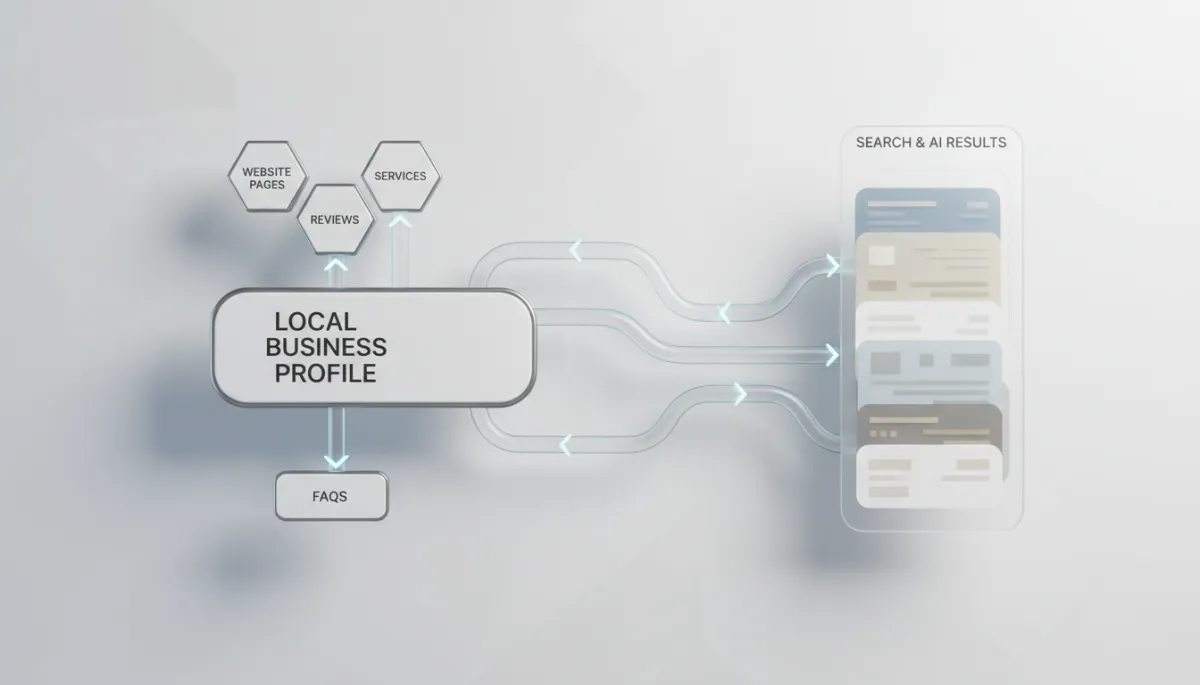
Connected schema turns scattered business details into a clear, trustworthy signal.
What Schema Can Do—and What It Cannot Do
Schema is powerful, but it’s not magic. Here’s the practical truth I share with every GenM Online customer:
What Schema Can Do
Help search engines and AI accurately understand your business identity, services, and content
Support rich results like business panels, FAQs, and better-looking listings when eligible
Strengthen the signals that connect your website, Google Business Profile, reviews, and content into one consistent story
What Schema Cannot Do
Guarantee rankings, traffic, or leads on its own
Replace real SEO work like strong content, fast pages, and clear service information
Make unsupported claims true (for example, marking yourself as “best in city” without visible proof)
Schema is a translator, not a salesperson. It translates the reality of your business into a format machines can trust. If the underlying reality is weak, inconsistent, or inaccurate, schema will not fix that—and can even hurt you if it conflicts with what’s visible on your site or profiles.
Why Accurate Business Information Matters So Much
Modern search and AI systems are obsessed with consistency and accuracy. They compare your website, Google Business Profile, directory listings, reviews, and schema markup. If your name, address, phone, hours, or services don’t match, trust drops—and your visibility often follows.
Accurate schema markup is one part of that bigger picture. When your schema confirms the same details that appear on your site, in your Google Business Profile, and across listings, you create a reinforced trust loop. That’s exactly what we focus on with the GenM Online Visibility & Trust Engine™—connecting and aligning all of these signals instead of treating them as separate tasks.
Schema as Part of a Connected Visibility & Trust System
Schema works best when it supports, and is supported by, the rest of your online presence. For local and service-based businesses, that means aligning:
Website SEO: Clear service pages, helpful content, fast load times, and mobile-friendly design
Google Business Profile: Accurate categories, services, hours, photos, and regular updates
Listings & Citations: Consistent name, address, phone, and website across major directories
Customer Reviews: Real, recent reviews that reflect the experience you promise on your site
Schema markup then ties all of this together for machines. It tells search and AI, “Here is the same business, with the same services, hours, and reputation, across all these places.” That’s how structured data supports modern visibility—especially as more customers rely on AI answers instead of scrolling through pages of links.
Common Schema Mistakes Local Businesses Should Avoid
Over the years, I’ve reviewed a lot of local websites and schema setups. The same issues show up again and again. Here are the big ones to avoid:
Duplicate schema: Multiple, conflicting LocalBusiness blocks on the same page, often from different plugins or templates. This confuses search engines instead of helping them.
Incorrect business details: Old addresses, wrong phone numbers, or outdated hours in schema that no longer match the site or Google Business Profile.
Unsupported claims: Marking up awards, ratings, or “best in city” statements that don’t appear on the page or link to credible sources. This can be treated as misleading.
Outdated information: Schema that was set up once and never touched again, even as services, hours, or locations changed.
Markup that doesn’t match visible content: For example, adding FAQPage schema for questions that don’t actually appear on the page, or listing services in schema that aren’t described anywhere on the site.
The rule of thumb I use at GenM Online is simple: if it’s not true, visible, and consistent, don’t mark it up. Schema should reflect reality, not stretch it.
How GenM Online Helps You Build a Connected Visibility & Trust Foundation
As a software systems strategist, I look at schema as one component in a larger system. GenM Online’s Visibility & Trust Engine™ is built to connect your:
Website content and service pages
Google Business Profile and key listings
Reviews, FAQs, and reputation signals
Schema markup across LocalBusiness, Organization, Service, WebSite, WebPage, FAQPage, BreadcrumbList, and Article or Blog Posting
Instead of chasing one-off tricks, we focus on helping local and service-based businesses get found, get chosen, and scale smarter by making sure every system is telling the same clear story about who you are and what you do.
Your Next Step: See Where Your Signals Are Strong—and Where They’re Not
If you’re not sure how well search engines and AI currently understand your business, you don’t have to guess. We built a simple way to check your core visibility and trust signals across your website, listings, reviews, and structured data.
I invite you to take the next step and Start Your Free Visibility Scan with GenM Online. You’ll see where your information is accurate and connected—and where gaps in schema, content, or listings may be holding you back from the visibility you’ve earned.
From there, you can decide whether to handle fixes in-house or let our connected Visibility & Trust Engine™ help you align everything—so search engines, AI platforms, and real customers all see a clear, trustworthy version of your business.


