Boost Local Business Visibility with SEO Checklist | GenM Online
Small Business Checklist, Local Business Visibility, Service-based SEO, Google Business Profile
The Practical Small-Business Visibility Checklist for Local and Service-Based Brands
I’m Stoney Morris, Founder & Chief Strategist at GenM Online. If you run a local or service-based business today, traditional SEO alone is not enough. You need a connected visibility system that makes your business easy to find, understand, trust, contact, and choose—across Google Search, Google Maps, AI assistants, directories, reviews, social, and your own website.
How to Use This Small Business Checklist and Scoring Framework
This Small Business Checklist is designed for local and service-based businesses—home services, clinics, professional services, and agencies that support them. You do not need technical expertise. Work through each section, mark every item as:
Complete — You’ve verified it recently and it works as intended.
Needs attention — Partially done, outdated, or inconsistent.
Missing — Not set up at all, or completely broken.
As you score each item, keep this priority order in mind:
Fix incorrect or missing business information first.
Repair broken contact paths—forms, phone numbers, messaging.
Strengthen profiles and reviews where customers first see you.
Improve website content and schema so search and AI can understand you.
Build ongoing workflows so visibility and trust become habits, not one-time projects.
Key Takeaway: SEO helps search engines understand your website. Modern visibility connects your website, profiles, listings, reviews, schema, and customer response into one system that helps search engines and AI understand, trust, and potentially recommend your business.
“SEO helps search engines understand your website. Modern visibility helps search engines and AI understand, trust, and potentially recommend your business.”
1. Website Foundation — Can People Quickly Understand and Trust You?
Clear homepage promise (Complete / Needs attention / Missing)
Does your homepage state who you serve, what you do, and where you operate—above the fold, in plain language? This is the first trust filter for both humans and search engines.Accurate contact and location details on every page
Verify your business name, address, phone, and service area are consistent in the header, footer, and contact page. Inconsistent NAP data can hurt Local Business Visibility across Google and AI systems.Fast, mobile-friendly experience
Test your site on a phone. Pages should load quickly, buttons should be easy to tap, and forms should be simple. Many local decisions now happen entirely on mobile.Basic local schema in place
Local business schema helps search engines interpret what your business is, where it operates, and how customers can contact it. If you are not sure, mark this as Needs attention and plan to address it with your web or SEO partner.
2. Google Business Profile — Your Primary Local Front Door
Once your website foundation is clear and accurate, your next priority is the profile many customers see first—your Google Business Profile. Google Business Profile is a major part of local discovery across Google Search and Maps. A complete and accurate profile makes it easier for customers to understand your services, hours, location or service area, and available contact options.
Verified and fully completed profile
Confirm your profile is claimed, verified, and every field is filled—categories, description, hours, website, phone, services, and attributes. Incomplete or outdated profiles can create confusion and make it harder for customers to verify important business details.Accurate categories and service area
Use a small number of precise categories that match your core services. Confirm your address and service area reflect how you actually operate—no virtual offices or P.O. boxes, which can lead to suspension.Up-to-date photos, posts, and Q&A
Add current photos, keep important information updated, and use available profile features when they are relevant to your business. An accurate, active-looking profile can give prospective customers greater confidence.
3. Business Listings and Directory Consistency — One Truth Everywhere
With your website and primary profile aligned, the next step is to make sure every major directory is telling the same story about your business. This turns scattered listings into a single, consistent identity that both humans and AI systems can rely on.
Consistent NAP across major directories
Check your name, address, and phone on Google, Apple Maps, Bing, Yelp, Facebook, industry directories, and key review platforms. Any mismatch can confuse both search engines and AI systems that rely on consistent citations.Aligned categories and descriptions
Make sure your categories and short descriptions tell the same story everywhere. This strengthens Service-based SEO and Generative Engine Optimization by reinforcing what you actually do.
For example, a local HVAC company may have the correct phone number on its website but an old number on a directory and outdated hours on another profile. Correcting those conflicts gives customers and automated systems a clearer, more consistent business identity.
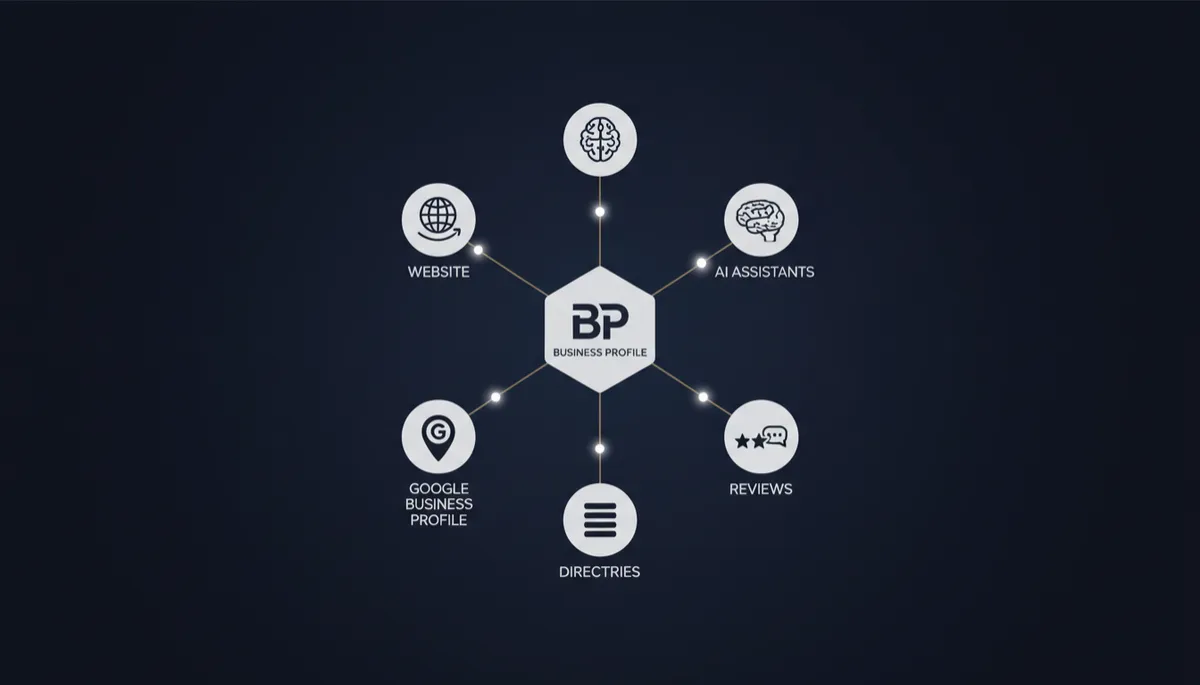
A connected visibility ecosystem turns scattered profiles into one trusted signal.
4. Reviews and Reputation — Customer Voices as Visibility Fuel
Once your core information is consistent, you can focus on what those profiles say about you. Reviews and reputation add real-world context that can influence customer decisions and help create a clearer, more trustworthy online presence.
Steady flow of recent reviews
Many prospective customers read reviews before choosing a local business. Recent, authentic reviews and professional responses can help people understand the quality and reliability of the customer experience.Responses to all reviews
Respond to every review—positive and negative—within a reasonable timeframe. This demonstrates active customer care and can increase the likelihood that someone chooses you over a silent competitor.Review requests built into workflows
Make review requests part of your standard process after jobs, visits, or successful outcomes. Avoid incentives or scripted language that violates platform guidelines. Focus on honest, organic feedback.
5. Business Identity and Trust — Signals That You Are Real and Reliable
Strong reviews are even more powerful when they match a clear, consistent brand identity. This section focuses on the visual and messaging signals that help people—and automated systems—recognize and trust your business wherever they find you.
Consistent branding and messaging
Your name, logo, colors, and tone should match across your website, Google Business Profile, social profiles, and directories. Consistency reduces friction and builds recognition over time.Visible customer trust signals
Highlight testimonials, certifications, team photos, and clear service guarantees. These elements help prospects feel confident they are dealing with a real, credible business—not just a listing.
6. Content Clarity — Make It Easy to Choose You
Once your identity and trust signals are aligned, your website content should remove friction from the decision itself. Clear, service-focused pages help prospective customers understand how you can help and give automated systems clearer information about your services and locations.
Service pages that match real customer searches
Each core service should have its own page with plain-language explanations, locations served, and next steps. This supports service-based SEO and makes your services, locations, and next steps easier for people and automated systems to understand.Clear pricing or expectations
You do not need to list every price, but you should set expectations—starting rates, typical ranges, or how estimates work. Clarity reduces friction and increases inquiries from qualified leads.
7. AI-Powered Discovery Readiness — Beyond Google Alone
As your content becomes clearer and more structured, you are better positioned for the next layer of discovery—AI assistants and generative search experiences. This section focuses on making your connected visibility system understandable to both humans and automated systems.
AI assistants are becoming another way people research businesses, services, and local options. Visibility in traditional search does not automatically guarantee that a business will appear in an AI-generated answer or recommendation.
Structured, consistent data across platforms
Clear website content, structured data, consistent business information, and reliable external sources can make it easier for automated systems to understand the business. Scattered or conflicting information can make that understanding more difficult.Rich, trustworthy external signals
Reviews, accurate directory listings, and mentions on reputable sites can provide additional context about a business. Together, these signals support a clearer and more verifiable online identity.
8. Contact and Lead Response — No Dead Ends
All of this visibility only matters if interested people can reach you—and hear back quickly. This section turns attention into conversations by making sure every path to contact is reliable and supported by a clear response process.
Multiple, working contact paths
Test your phone number, contact forms, email links, and messaging options from your website, Google Business Profile, and social pages. Any broken contact path can result in missed opportunities and should be corrected promptly.Defined response time standards
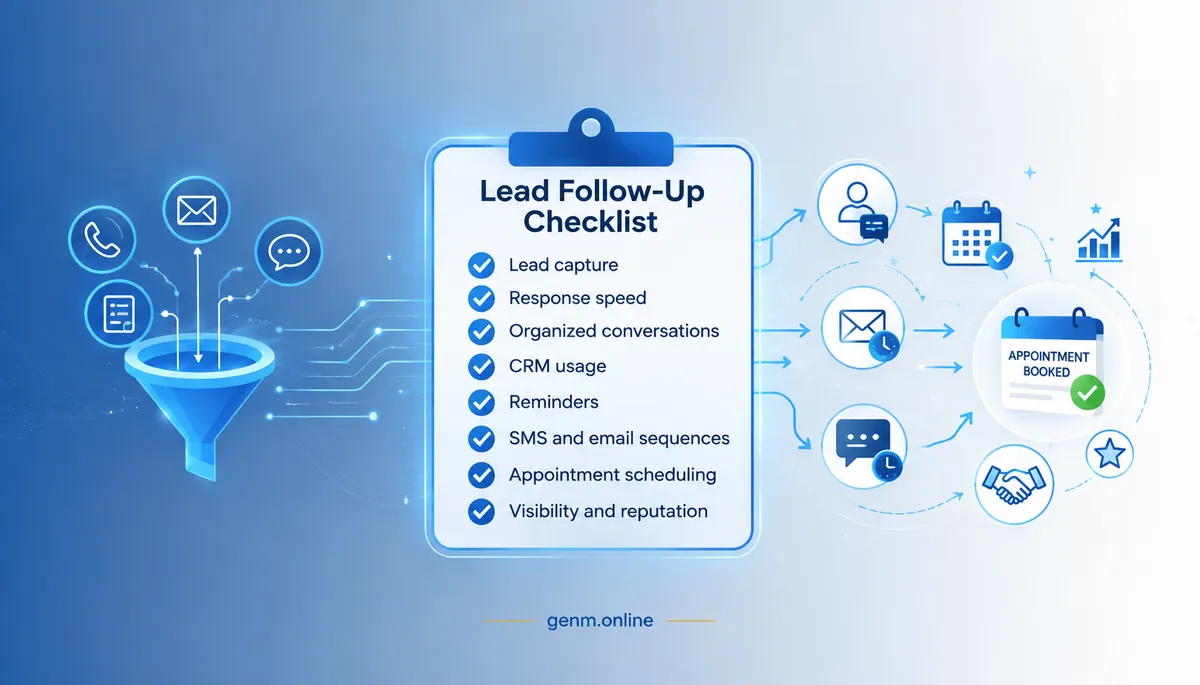
Decide how quickly you will respond to new leads—within minutes, hours, or by next business day—and set up notifications or automation to make that realistic. Faster, reliable responses can improve the customer experience and reduce the chance that an inquiry goes unanswered.
For example, a professional-services firm may have a working contact form but no acknowledgment or internal routing process. A simple confirmation and assigned follow-up task can prevent an otherwise qualified inquiry from being overlooked.
9. Ongoing Visibility Maintenance — From One-Time Fixes to Systems
The final step is to protect everything you have built. Visibility and trust are not set-and-forget—they require lightweight, repeatable maintenance so your connected system stays accurate, responsive, and ready for new opportunities.
Quarterly visibility audit
Schedule a recurring review of your website, Google Business Profile, directories, reviews, and key contact paths. Visibility is infrastructure—if you do not maintain it, it quietly decays.Documented workflows and ownership
Decide who is responsible for updating hours, responding to reviews, posting on GBP, and reviewing lead response times. Clear ownership turns good intentions into consistent execution.
Pro Tip: Start by marking every item as Complete, Needs attention, or Missing. Then build a 30–60 day action plan that follows the priority order—fix data, fix contact, strengthen profiles and reviews, improve content and schema, then lock in ongoing workflows.
Where GenM Online and Get Found — Visibility & Trust Engine Fit In
At GenM Online, we see SEO as one part of a larger system. SEO helps search engines understand your website. Modern visibility helps humans and AI assistants trust and recommend your business—because your website foundation, profiles, listings, reviews, schema, and customer response are all working together.
That is why we built Get Found — Visibility & Trust Engine. It acts as the connected foundation for local and service-based businesses and the agencies that support them. Instead of chasing one-off tactics, you manage:
Core business information and listings consistency from one place.
Reviews, reputation, and customer trust signals across platforms.
Website visibility and schema alignment with your real-world services.
Contact and lead response workflows that help you respond faster and convert more opportunities.
The goal is simple. Help your business—or your clients—get found, get chosen, and scale smarter in a world where Google, Maps, and AI assistants all shape the buying journey.
Turn Your Checklist into an Action Plan
You now have a practical Small Business Checklist that covers website foundation, Google Business Profile, Business Listings Consistency, Reviews and reputation, Business identity and trust, Content clarity, AI-powered discovery readiness, Contact and lead response, and Ongoing visibility maintenance. The next step is to establish a clear baseline and identify which areas deserve attention first.
GenM Online’s Get Found — Visibility & Trust Engine starts with a focused scan of your current presence across key platforms. It helps reveal where your visibility and trust foundation is strong and where important gaps may need attention—then helps you prioritize fixes in the right order.
Do not try to fix everything at once. Correct inaccurate information and broken contact paths first, then strengthen your profiles, reviews, website content, schema, and ongoing workflows. Each completed step makes the business easier to understand, verify, contact, and choose.


